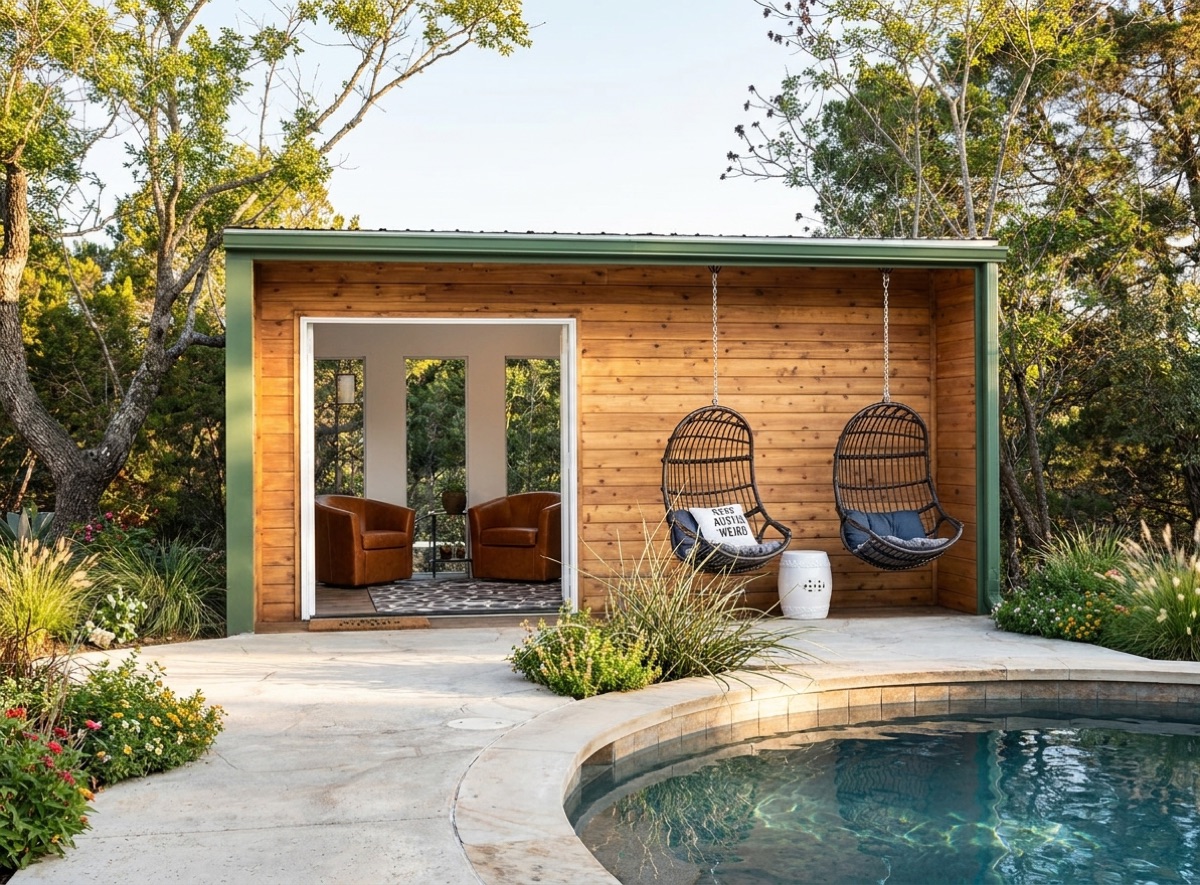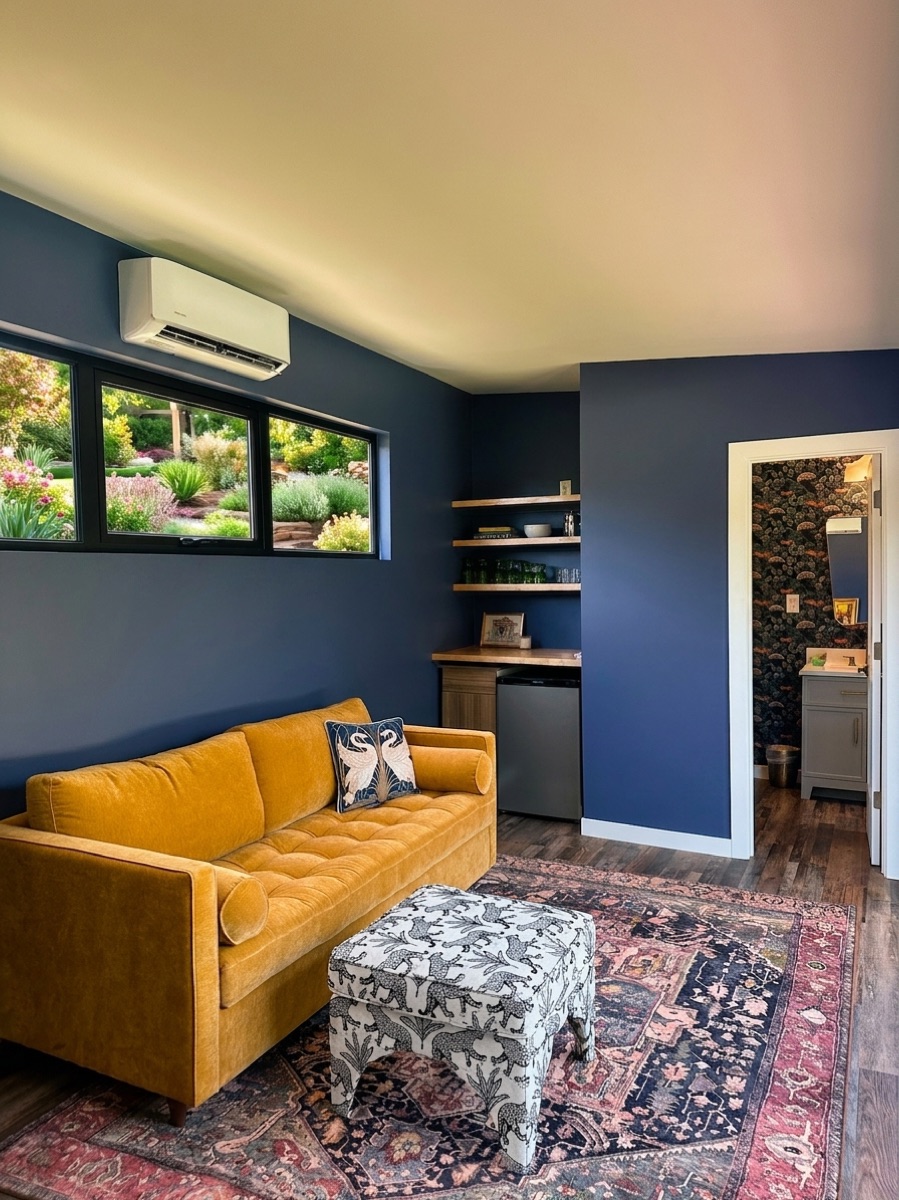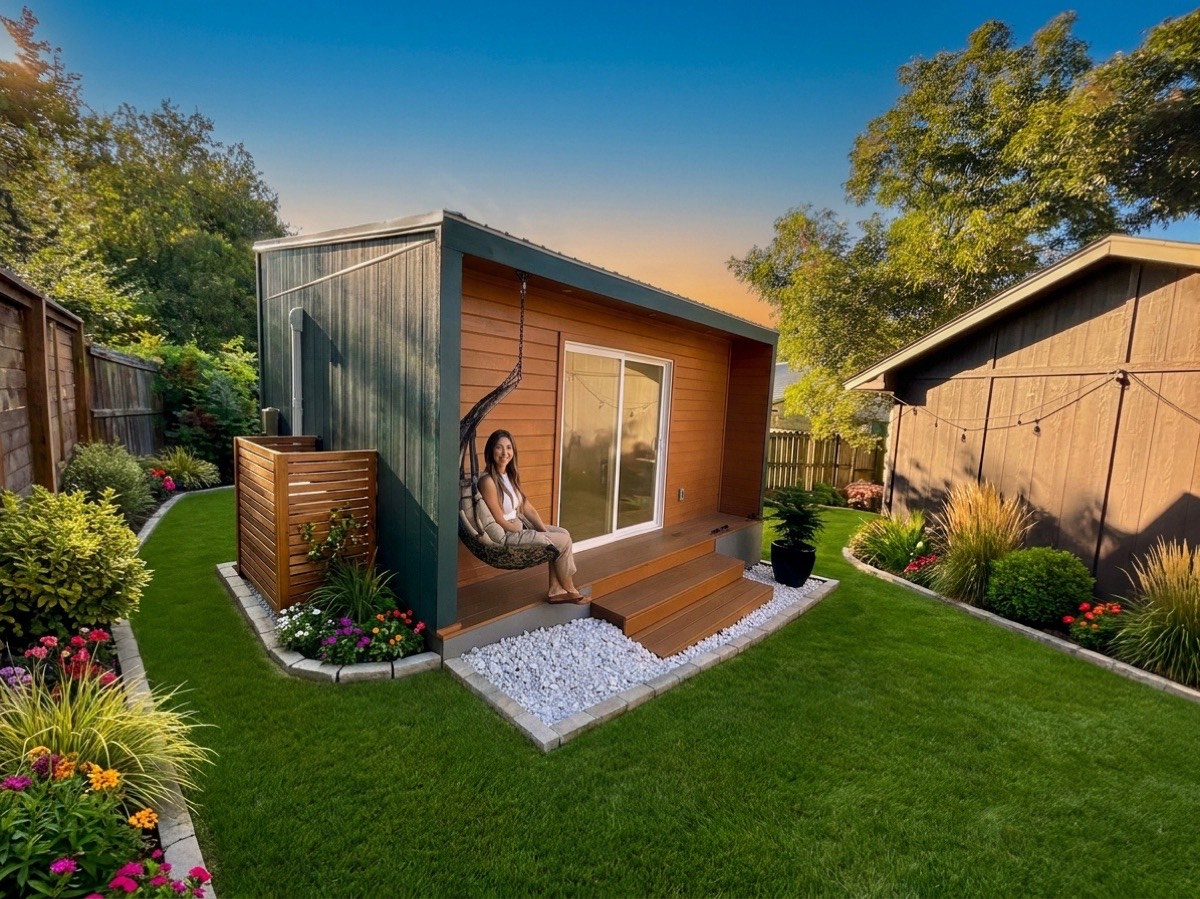
Office shed or ADU? We break down the real differences in cost, permitting, and use cases so you can choose the right backyard structure for your Austin home.
You want to add a structure to your backyard. Maybe it's for a home office, maybe for a rental, maybe for your mother-in-law — or all three in a rotating cast. The options for adding usable space to an Austin property have never been better, but two categories generate the most confusion: the backyard office shed (or studio pod, flex room, office pod) and the Accessory Dwelling Unit, better known as an ADU.
They look similar from the outside. They both live in your backyard. But legally and practically, they are completely different — and choosing the wrong one for your goals can cost you tens of thousands of dollars and a year of your life. This guide explains exactly what separates them and helps you decide which fits your goals.
The Core Difference: Dwelling vs. Non-Dwelling
The most important distinction is legal: whether the structure is permitted and used as a dwelling unit. A dwelling unit includes provisions for sleeping, cooking, and sanitation — a bed, a kitchen or kitchenette, and a bathroom. ADUs are dwelling units, regulated under residential building codes and held to full habitability standards.
An office shed, studio pod, or gym pod under 200 sq. ft. with no plumbing and no dwelling use is an accessory structure — not a dwelling. It's held to a significantly lighter standard under the building code and often qualifies for permit exemptions that ADUs never would. Everything else flows from this single distinction.
What Is an ADU?
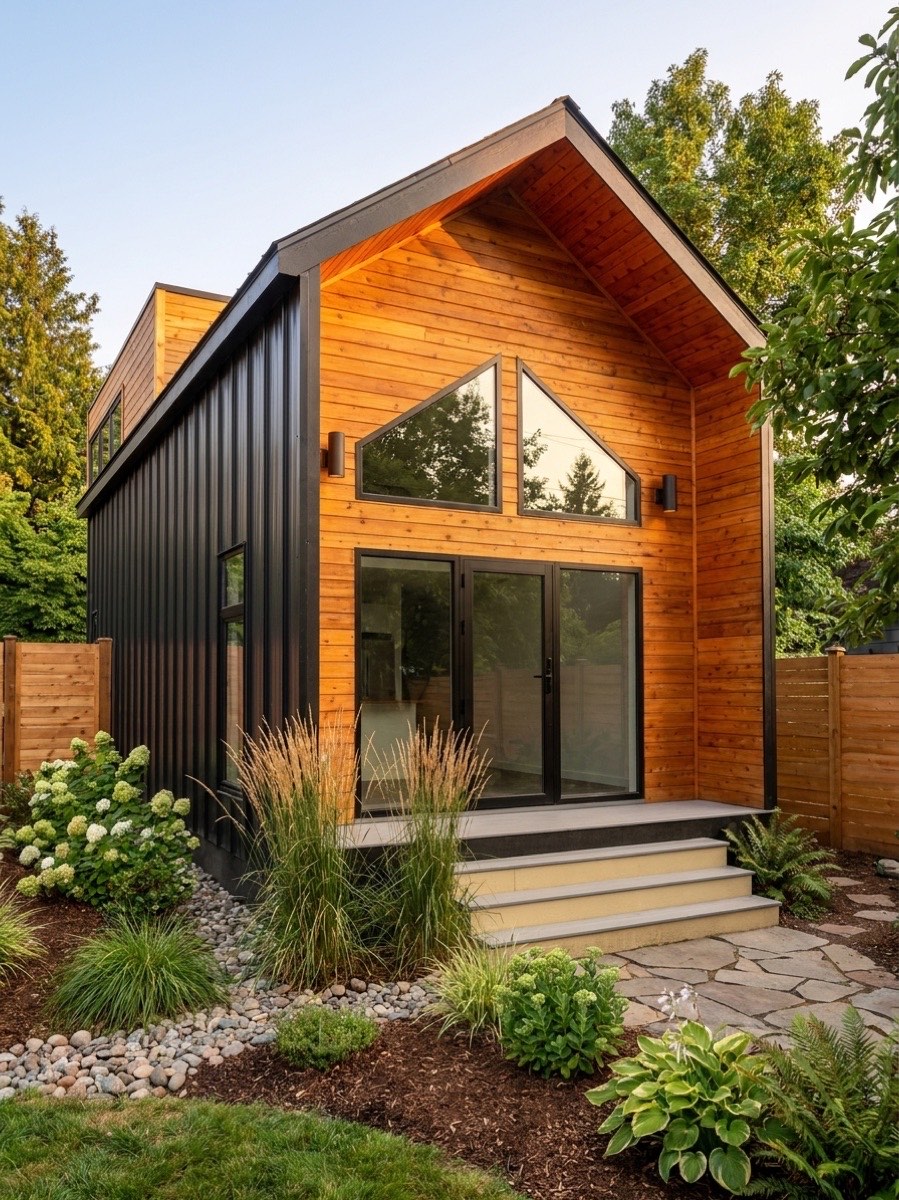
An Accessory Dwelling Unit is a secondary, self-contained housing unit on a single-family property. It includes sleeping space, a kitchen or kitchenette, and a full bathroom. ADUs come in several forms — detached (a separate backyard structure, the "guest house" most people picture), attached (sharing a wall with the main house), or a garage conversion. In Austin, ADUs are permitted citywide following major zoning reforms, and the city has worked to streamline approvals — but it remains significantly more complex than permitting a non-dwelling accessory structure. Our Pod Living line and two-story Pod Villa are purpose-built, permitted ADUs.
What Is a Backyard Office Shed or Studio Pod?
A backyard office shed, studio pod, or gym pod is a non-dwelling accessory structure — designed for working, exercising, creating, or focused quiet time, not full-time habitation. Key characteristics:
- No plumbing — no bathroom, no kitchen sink, no utility connections requiring plumbing permits
- Typically under 200 sq. ft. — Austin's permit-exemption threshold for non-dwelling structures
- Equipped with electricity for lighting, HVAC, and all your electronics
- Finished to a high interior standard: insulated, climate-controlled, professional-grade
Our Pod Essentials office, gym, and studio pods — and permit-free Autonomous WorkPods — fit squarely in this category: fast to install, beautifully finished, and permit-friendly.
| Backyard Office Pod | Detached ADU (Austin) | |
|---|---|---|
| Typical cost range | $38,990–$58,990 | $150,000–$300,000+ |
| Pricing structure | All-inclusive, fixed | Variable, change orders common |
| Architect/designer fees | Included | $5,000–$15,000 additional |
| Permit | Trade permits only (we handle it) | $5,000–$15,000+ full building permit |
| Timeline | 4–8 weeks | 12–18+ months |
| Plumbing required | No | Yes |
An ADU is a fundamentally larger project. At $200–$300 per square foot for a 500 sq. ft. structure, a finished Austin ADU typically runs $100,000–$200,000 — before soft costs like design fees, permit fees, and the near-universal reality of construction overruns.
Permitting: A Major Differentiator
In Austin, adding a non-dwelling accessory structure under 200 sq. ft. typically requires only trade permits — no architectural drawings, no structural engineer, no months of permit review. We handle permitting for you. An ADU requires a full building permit: architectural plans (often with structural engineering), a review that can take 60–120 days, inspections at multiple stages, and compliance with Austin's ADU-specific rules on setbacks, size, owner-occupancy, and utility tie-ins. That process typically adds 3–6 months before a single board is nailed.
Rental Income: Where ADUs Win Clearly
If generating rental income is your primary goal, an ADU is the right choice. ADUs can be legally rented as short-term or long-term rentals in Austin, subject to city regulations. A well-finished 400–500 sq. ft. backyard ADU can generate roughly $1,500–$3,500 per month depending on season, finishes, and location. Curious what your yard could earn? Try our rental income calculator.
An office shed cannot be legally rented as a dwelling. You can run a business from it, meet clients, or use it as your private workspace — but renting it to someone who sleeps there is not legal under an accessory-structure permit.
Who Should Choose a Backyard Office Shed?
- Remote workers who need a professional, quiet workspace fully separated from the house
- Homeowners who want a home gym, yoga or art studio, podcast studio, or golf-simulator room
- Anyone who needs a fast solution — 4–8 weeks instead of 12–18 months
- Homeowners on a defined budget who want maximum quality per dollar
- Anyone who wants to avoid the full building-permit process
Who Should Choose an ADU?
- Homeowners whose primary goal is rental income from a legal dwelling unit
- Families who want a permanent guest suite with a full bathroom and kitchenette
- Multi-generational households where a parent or adult child needs to live on-site independently
- Long-term investors adding recurring rental income to a property
The Hybrid Approach: Start With a Pod, Plan for an ADU
For many Austin homeowners, the right answer is phased. An office pod delivers immediate value — workspace you can use this year — while you plan, permit, and save for a future ADU. It's the same trusted builder for both stages.
Which One Is Right for You?
The choice comes down to one question: do you need a place for people to live, or a place for people to work, train, or create? If it's the latter, a backyard pod is faster, cheaper, and far simpler. If it's the former, an ADU is worth the extra time and cost.
Not sure which one fits your backyard?
A 30-minute consultation tells you whether an office pod or an ADU is the right fit — and exactly what it would look like in your yard. Fixed pricing, permitting handled, installed in weeks.